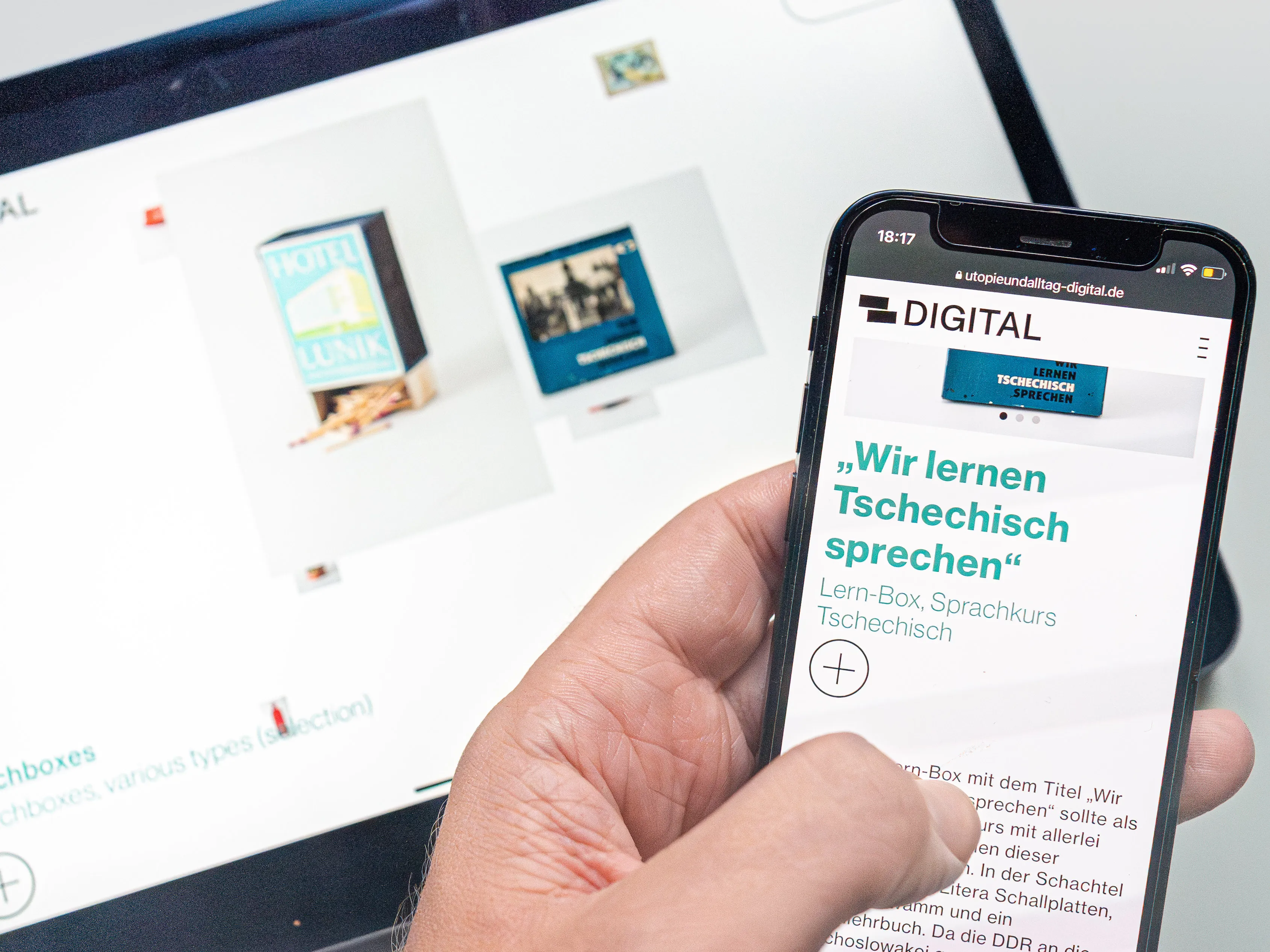
How a regional museum with entirely analogue infrastructure launched a digital platform for its everyday-object collection — on time, on budget, passing GDPR and accessibility audits, and leaving staff fully independent of outside help.
Cultural Heritage · Federal Funding · WordPress + React
My Role
The Documentation Center for Everyday Culture of the GDR preserves objects that describe daily life in East Germany — from household tools to posters and toys. Until 2021 almost none of these collections were accessible online. The museum’s infrastructure was entirely analogue, even though its mission was to document a digital-age understanding of memory. Federal funding finally made a digitisation project possible, but the grant came with fixed milestones, quarterly reports, and strict compliance rules.
Rather than seeing bureaucracy as an obstacle, we used it as structure. The funding logic — reports, audits, deliverables — became the project rhythm. Each quarter required visible progress, so the plan focused on one measurable goal: make the museum capable of publishing independently by the end of the grant.
Platform walkthrough showing collection browsing and object interaction.
Whether the platform needed a landing page at all was a long discussion. The alternative was an app-like approach — dropping visitors straight into the collection, as close to posting their first image as possible. We decided in favour of a dedicated start page to introduce the project and set expectations, but compromised on friction: the page included a reveal-on-scroll animation, and after a timeout it redirected automatically into the main feed. Once a visitor had seen the tutorial, we cached that state — on their next visit, they skipped the landing page entirely and went straight to the collection. First-time visitors got context; returning users barely noticed the page existed.
Process and Decisions
The museum had no prior digital framework, so every layer — content, metadata, design, accessibility — had to be defined from zero. Halfway through, the agency Wunderfarm joined to handle visual design and communication. Their arrival required clear interfaces between editorial, technical, and design work, which we formalised through documentation and handover templates.
Architecture followed the same logic of clarity. A WordPress CMS managed content and media; a React frontend handled presentation and filtering. This combination was simple enough for the museum team to maintain and modern enough for future integration into the federal collection network. Accessibility and GDPR compliance were non-negotiable, so both were built into every review.
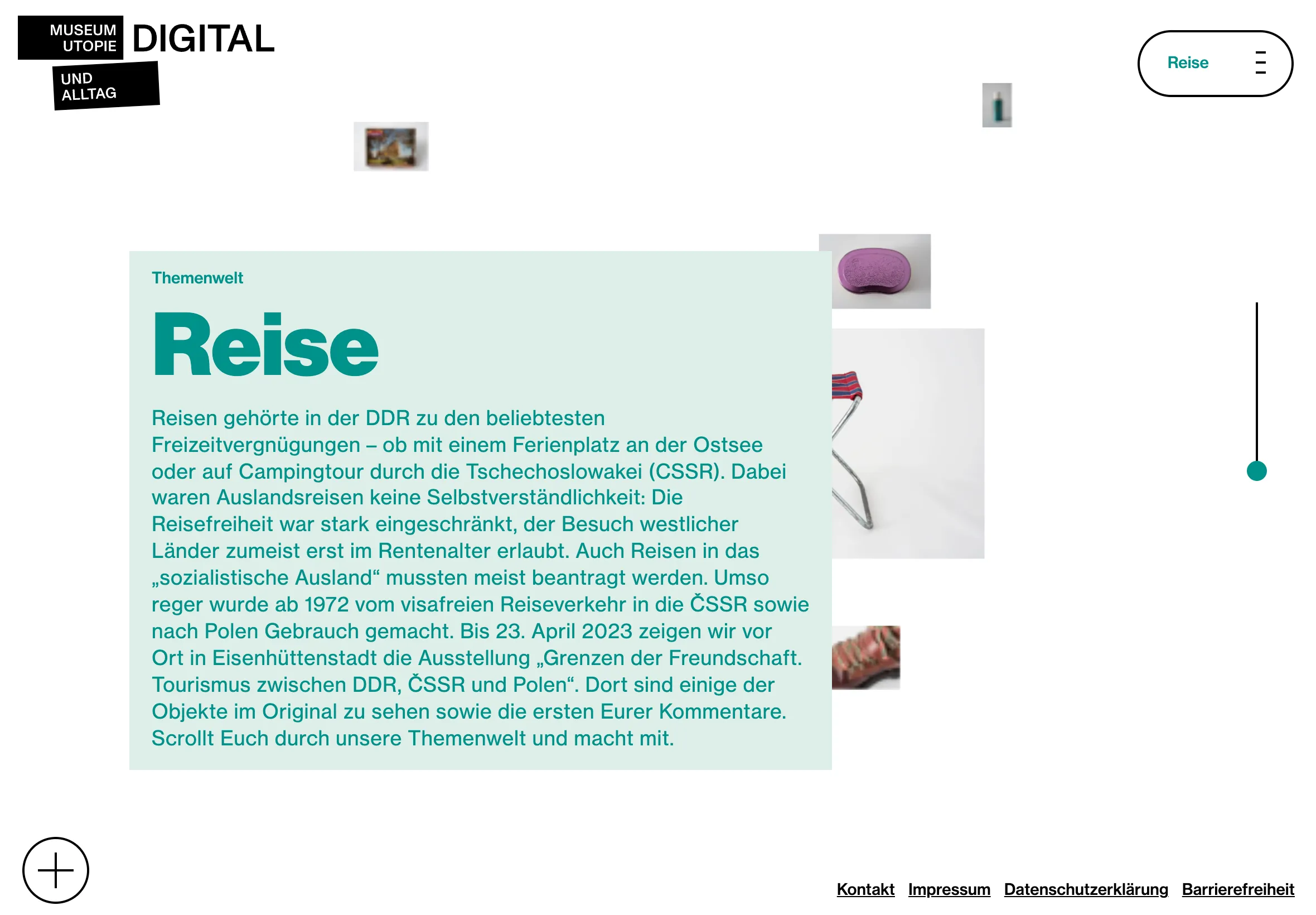
Themenwelt "Reise" — thematic entry point with editorial context about GDR travel restrictions and a link to the physical exhibition in Eisenhüttenstadt.
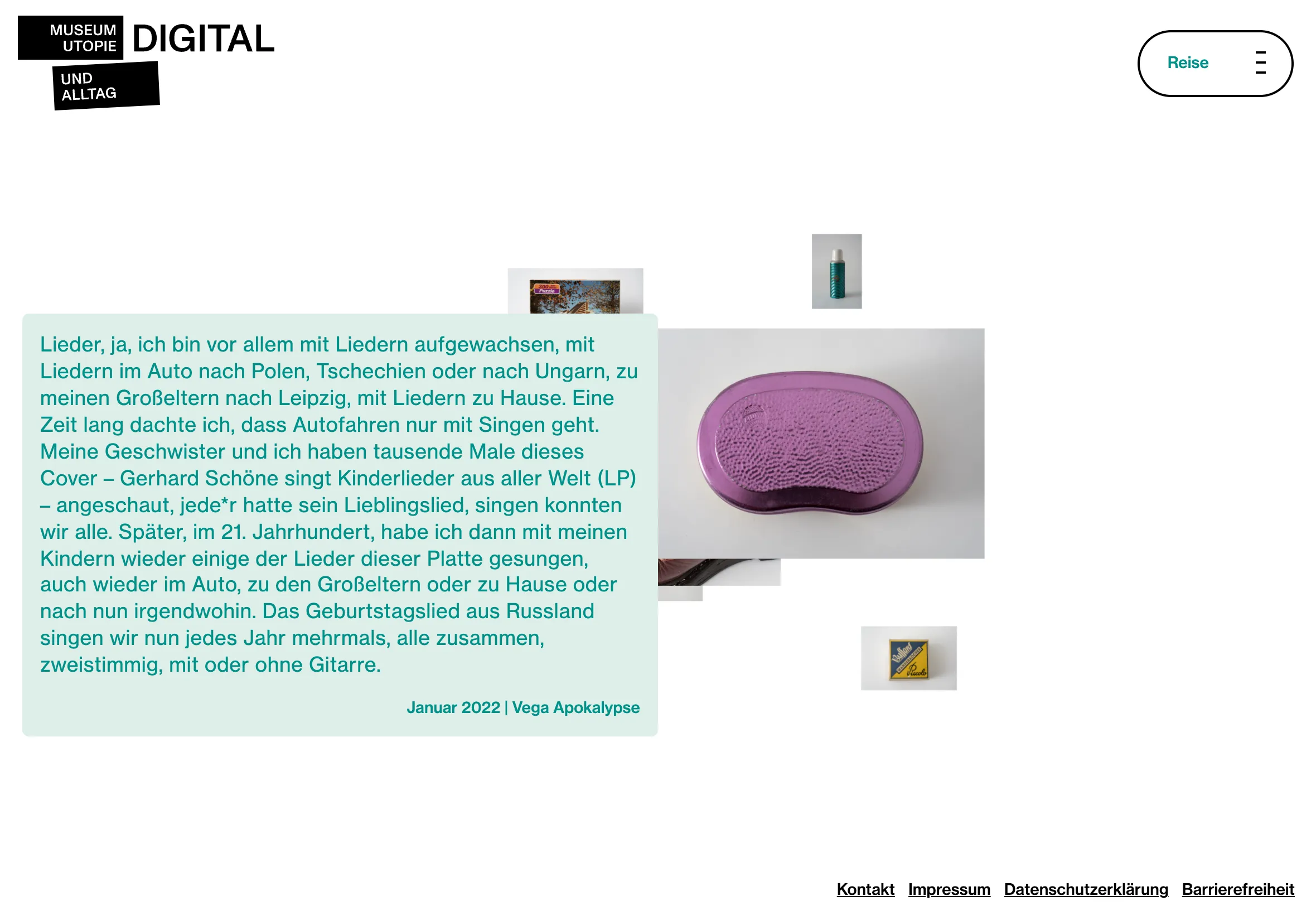
A personal reflection by contributor "Vega Apokalypse" about growing up with songs on car trips to Poland, Czechia, and Hungary. The curated-voice format in action: object and personal memory side by side.
The content structure was built around Themenwelten — thematic worlds. Rather than digitising the entire collection at once, each Themenwelt covered one special exhibition topic. “Reise” (travel) was the first. This was a budget decision as much as a design decision: the museum could digitise one Sonderausstellung at a time, building the platform incrementally while each new theme gave the project a visible public milestone.
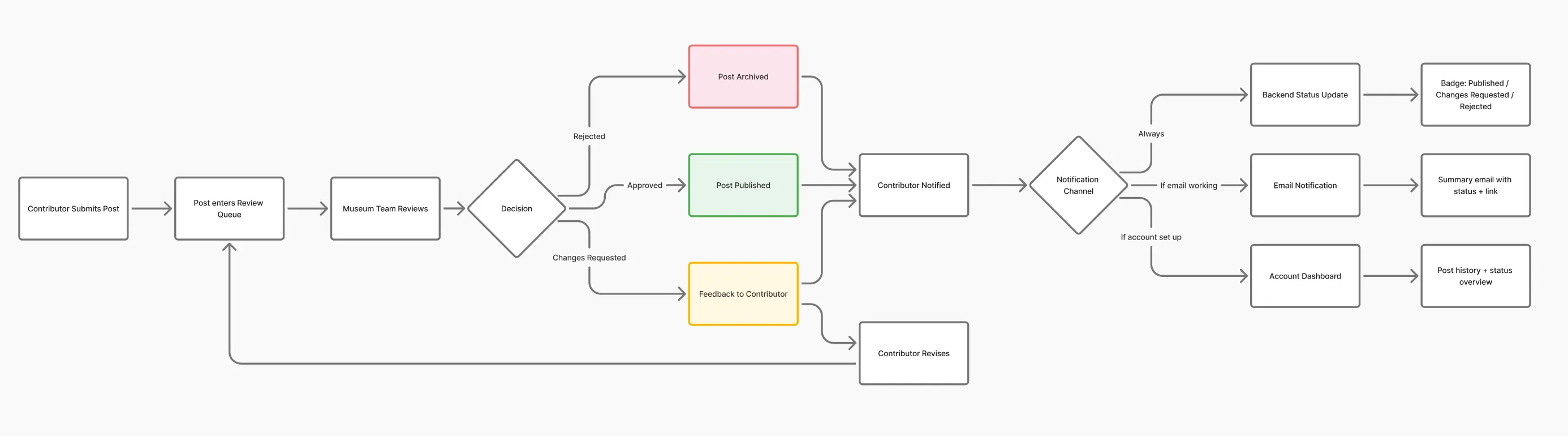
Backend review flow: post submission → museum team review → approve, request changes, or reject → contributor notified via backend status, email, or account dashboard. Revision loop for requested changes.
Open community features were ruled out early. Moderating thousands of potential comments would have exceeded staff capacity and legal responsibility. Instead, about forty invited contributors from the museum’s extended network wrote short reflections on selected objects. Their voices represented different generations and professions, creating perspective without the unpredictability of an open forum. Contributors who were uncomfortable submitting through the platform directly could choose to receive their data as email instead — a low-barrier fallback that kept participation open without forcing everyone into the same workflow.
To reach local audiences with limited online access, the project combined the digital launch with small printed catalogues and regional workshops. This hybrid approach extended the collection’s reach while staying realistic for a regional museum.
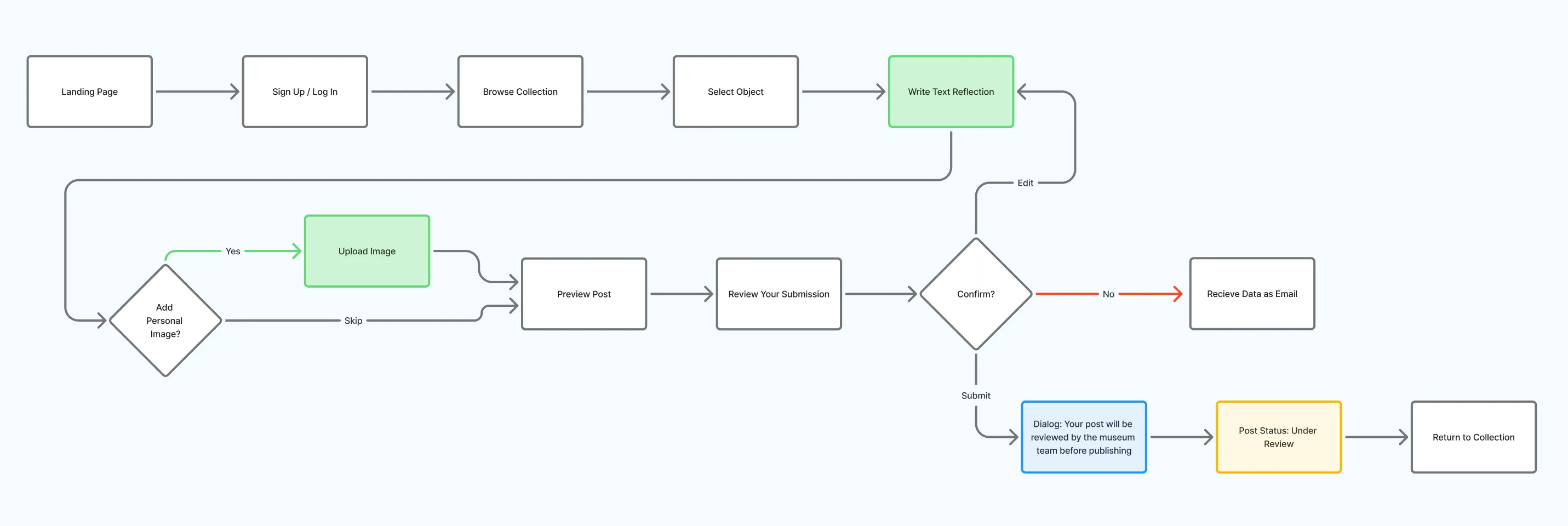
Frontend contributor flow: sign up → browse collection → select object → write text reflection → optionally upload image → preview → confirm submission → "your post will be reviewed" dialog. Alternative path for contributors who decline: receive their data as email.
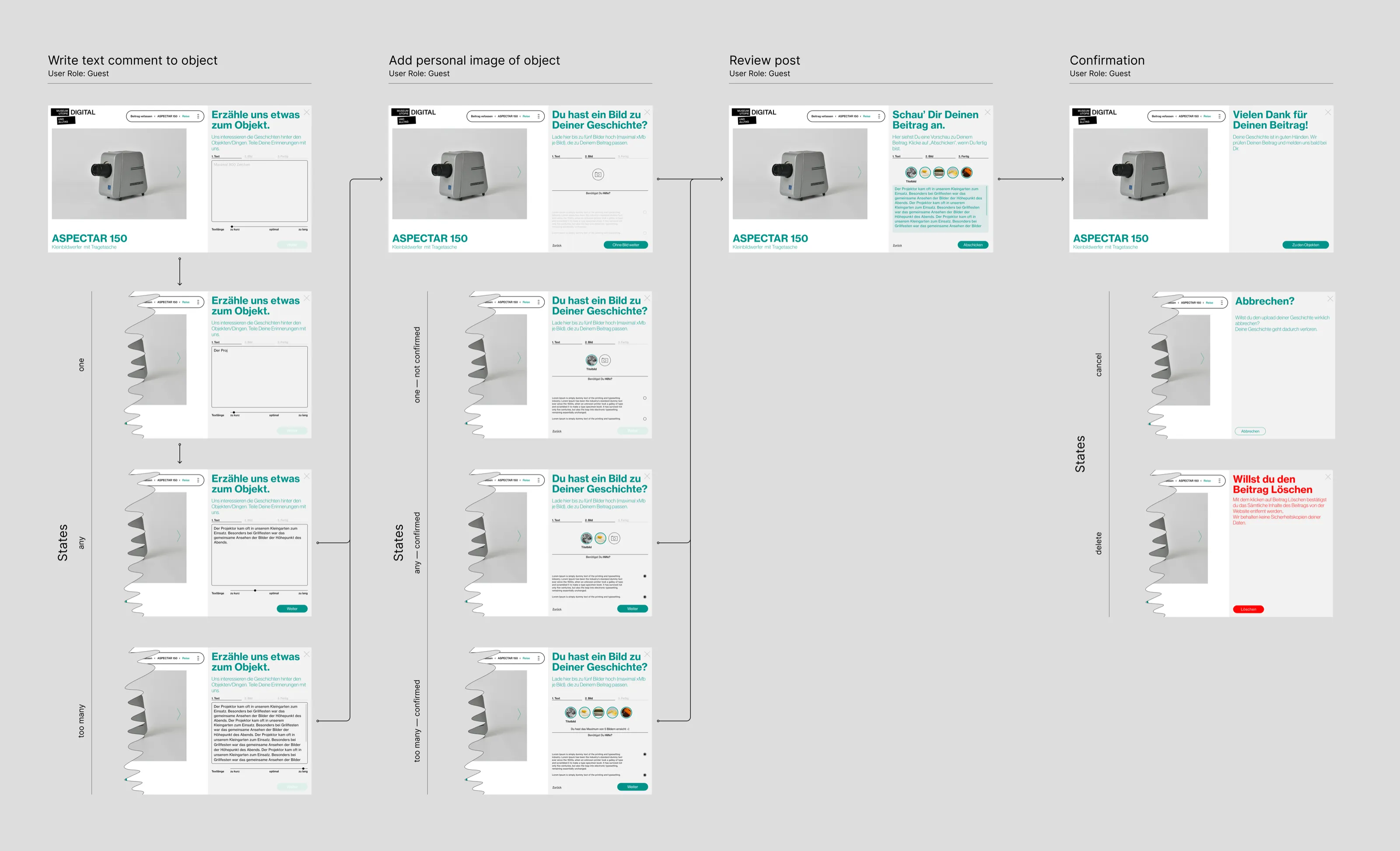
Detailed wireflow of the contributor posting flow — text comment, personal image upload, review, and confirmation — with empty, filled, and error states per step.
Early platform recording showing a different interaction state during development.
Key objects were digitised with slow, single-orbit camera passes — a rotation that conveys the physicality of everyday GDR artefacts. Delivering a sense of three-dimensionality within the MVP was a deliberate constraint: visitors needed to feel the material presence of objects they couldn't touch.
Impact
By the project’s end, the system had passed Brandenburg’s GDPR and accessibility audits. The museum staff could upload, edit, and curate content without outside help. The WordPress / React stack ran reliably on the museum’s existing servers and required no ongoing agency maintenance. All documentation — technical and editorial — was archived as part of the federal reporting package, ensuring continuity after the grant closed.
The curated-voice model proved sustainable: contributors remained engaged, and content quality stayed consistent. Instead of chasing reach metrics, the museum gained editorial confidence and technical independence. Federal authorities accepted the final report without revision, completing the project on time and within budget.
Digitising a museum collection under public-funding constraints demanded discipline more than innovation. Progress was measured not by features but by stability. The project succeeded because it aligned design decisions with administrative structure — turning requirements into framework instead of friction. The museum publishes independently now. The system runs on their own servers, maintained by their own staff.